 Plumbing
Cost of Water Heater Replacement in Houston, 2026
Tank swaps by size and fuel, attic-install pricing, and Houston permit rules explained.
Typical: $900 – $1,900
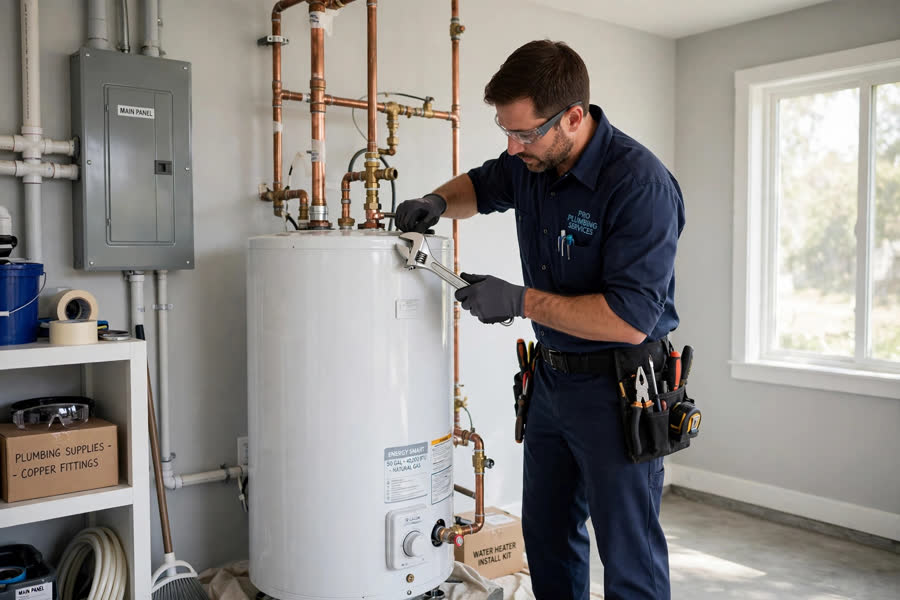
Tankless water heater installation, professionally installed in Phoenix:
A like-for-like tankless swap is the cheapest version of this job. Most Phoenix installs are conversions from a tank, which adds gas, venting and sometimes electrical work. Phoenix's hard water also makes a descaler or softener worth budgeting. Prices vary by home and contractor.
Tankless is the fastest-growing water heater choice in the Valley, and Phoenix is close to ideal territory for it: incoming water is warm most of the year, so a tankless unit delivers more of its rated flow here than it would in a cold climate, and there's no 50-gallon tank quietly cooking in a 130°F garage all summer. The catch is the install price. Unlike a tank swap, going tankless is a small construction project — new venting, usually a bigger gas line, and condensate drainage — and quotes across Phoenix, Mesa, Scottsdale and Glendale vary accordingly.
Nationally, tankless installation runs $1,406–$3,902 with an average of about $2,641 (Angi, 2026), and most Phoenix jobs land between $1,900 and $4,200. This guide shows what each version of the job costs, what a complete quote includes, and the Phoenix-specific wrinkle — very hard water — that should shape which unit you buy and how it's protected.
| Setup | Installed cost | Good to know |
|---|---|---|
| Electric tankless — like-for-like swap | $1,400 – $2,800 | Cheapest route if wiring already supports it |
| Gas tankless — like-for-like swap | $1,900 – $3,500 | Existing vent and gas line already sized correctly |
| Gas tankless — conversion from tank | $3,000 – $5,600 | The most common Phoenix job: new gas line, venting, condensate drain |
| Electric tankless — conversion from tank | $2,500 – $4,800 | Often needs dedicated circuits or a panel upgrade |
| High-flow condensing gas unit (199k BTU) | $3,500 – $5,600 | For 3+ bathroom homes running showers simultaneously |
| Point-of-use mini tankless (single fixture) | $600 – $1,400 | Under-sink units for a remote bathroom or casita |
Installed prices include the unit, labor, standard venting and fittings. Ranges compiled from Angi and HomeGuide 2026 cost data: tankless installs nationally run $1,400–$5,600 depending on conversion work.
| Line item | Typical cost |
|---|---|
| Tankless unit (gas or electric) | $300 – $2,100 |
| Installation labor | $300 – $2,500 |
| Gas line upsizing (conversions) | $300 – $900 |
| New venting through roof or wall | $500 – $1,500 |
| Condensate drain & neutralizer (condensing units) | $100 – $400 |
| Permit, old tank removal & disposal | $200 – $500 |
Permits, panel work and removal commonly add $200–$500 beyond the base install. If a quote shows only the unit price, the conversion work is coming later as a "surprise" — ask for the whole project in writing.
The single biggest factor. Replacing an existing tankless unit reuses the gas line, vent and drains. Converting from a tank rebuilds all three — that's the difference between a $2,200 job and a $4,500 one.
Bigger homes running two showers and a dishwasher at once need a high-flow 9–11 GPM unit. Phoenix helps here: warm groundwater means the unit loses less capacity to temperature rise than in cold states.
Gas units cost more upfront but heat water faster and cheaper per gallon in most Phoenix homes. Electric units are cheaper to buy, but whole-house models demand heavy amperage — a panel upgrade can add $1,300–$4,000 and erase the savings.
Phoenix water is among the hardest in the US. Without a softener or an inline descaler, scale coats the heat exchanger, chokes flow and voids warranties. Budget $150–$400 for a descaler, or fold the job into a softener install.
Garage installs near existing utilities are cheapest. Moving the unit — for example, from an interior closet to an exterior wall — adds piping runs and a longer vent path, and exterior mounts need freeze protection even in Phoenix (winter nights do drop below freezing).
Condensing units squeeze more heat from exhaust and run more efficiently, but they produce acidic condensate that needs a drain and neutralizer. Non-condensing units are cheaper to buy and need pricier stainless venting instead.
Most Phoenix homeowners pay $1,900–$4,200 installed. A like-for-like swap can start near $1,400; a full conversion from a tank — new gas line, venting and condensate drain — typically runs $3,000–$5,600. The national average is about $2,641 (Angi, 2026).
Yes — it's the number-one local risk. Phoenix water is very hard, and mineral scale builds up on the heat exchanger, reducing flow and efficiency and potentially voiding the warranty. Most manufacturers effectively require water treatment in hard-water areas. Fit an inline descaler or softener at install time and descale about once a year.
A like-for-like swap takes 3–5 hours. A tank-to-tankless conversion — gas line, new venting, condensate drain, old tank removal — is typically a full day. Panel upgrades, when needed, can add a second visit from an electrician.
Tankless units are 8–34% more energy-efficient than storage tanks because they don't keep 50 gallons hot around the clock, saving a typical household roughly $40–$200 a year on water heating. Phoenix's hot garages trim the standby-loss advantage a little — a tank here loses less heat to the room than one in a Minnesota basement — so buy tankless mainly for endless hot water and the freed-up floor space, with the energy savings as a bonus.
Expect 15–20 years — roughly double a tank's life — provided the unit is descaled regularly. Neglected units in hard-water cities like Phoenix often fail years early from scale buildup, which is why the maintenance matters more here than almost anywhere else.
Yes. Phoenix requires a permit for water heater installation and replacement, and gas work must meet code for line sizing and venting. Permits and related fees are usually folded into the $200–$500 of extras beyond the base install — your installer should pull the permit as part of the job.
Disclaimer: Prices on this page are researched estimates compiled from published national cost data (Angi, HomeGuide, Homewyse — checked October 2026), shown as ranges, not quotes. Actual prices vary by home, contractor, and market conditions. Always confirm the full scope of work and the final price in writing before any work begins.
PlumbingTank swaps by size and fuel, attic-install pricing, and Houston permit rules explained.
PlumbingPEX vs. copper pricing by home size, and when a repipe beats another decade of patch repairs.
PlumbingSnaking vs. hydro-jetting, main-line pricing, and when a camera inspection is worth it.