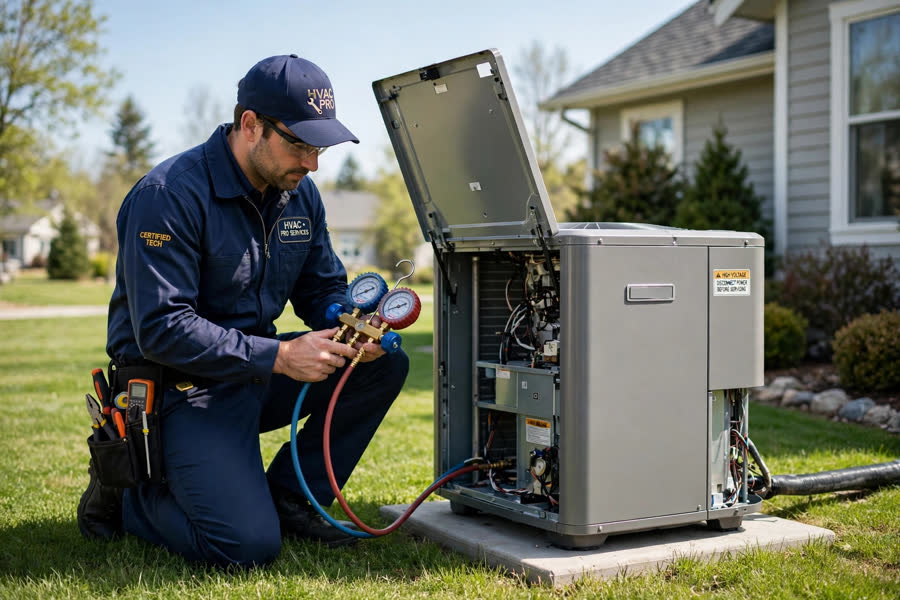
 HVAC
Cost of HVAC Replacement in Phoenix, 2026
Full heating + cooling system changeouts in the Valley — heat pumps, split systems and rooftop packages.
Typical: $7,000 – $15,000
Gas furnace replacement, professionally installed in Chicago:
Chicago prices run about 8–12% above the national average — higher labor rates and stricter city permitting. Broader national datasets that include small electric units show lower averages, so compare like with like. Prices vary by home and contractor.
When a Chicago furnace quits in January, the house starts losing the fight against single-digit temperatures within hours — pipes included. That urgency is exactly when homeowners overpay. More than 87% of furnace replacements in the Chicago area are natural gas, and quotes for the same furnace in the same basement can differ by $3,000. This guide breaks down what a replacement should cost in 2026, what belongs in a fair quote, and where the extra charges hide.
For a typical gas furnace replacement — new unit on existing ductwork and gas line — most Chicago homeowners pay between $5,900 and $10,900 installed. High-efficiency condensing models with new venting sit at the top of that range; simple 80% AFUE swaps come in lower. The tables below show where your job is likely to land.
| Furnace | Installed cost | Good to know |
|---|---|---|
| 60,000 BTU, 80% AFUE, single-stage | $4,500 – $6,200 | Smaller homes, condos, mild-demand bungalows |
| 80,000 BTU, 80% AFUE, single-stage | $5,000 – $6,800 | The classic Chicago basement swap; vents through the existing chimney flue |
| 80,000 BTU, 95–96% AFUE, two-stage | $5,900 – $8,400 | The most common upgrade; needs PVC venting and a condensate drain |
| 100,000 BTU, 95–96% AFUE, two-stage | $6,800 – $9,600 | Larger two-story homes, 2,200+ sq. ft. |
| 100,000 BTU, 97–98% AFUE, variable-speed/modulating | $8,400 – $10,900 | Quietest, most even heat; lowest gas bills |
| Electric furnace | $2,500 – $5,500 | Cheaper to install, much more expensive to run in a Chicago winter |
Installed prices include the furnace, standard labor, permit and disposal of the old unit. Ranges compiled from Chicago-area project data (Four Seasons), Angi Chicago and Modernize, 2026. AFUE = Annual Fuel Utilization Efficiency: the share of gas that becomes heat.
| Line item | Typical cost |
|---|---|
| Furnace equipment (gas, 80k–100k BTU) | $2,000 – $6,200 |
| Installation labor ($85–$100/hr Chicago rates) | $1,500 – $3,800 |
| City of Chicago permit & inspection | $100 – $300 |
| PVC venting & condensate drain (high-efficiency models) | $300 – $900 |
| Sheet-metal transition & duct connections | $200 – $700 |
| Thermostat (programmable or smart) | $100 – $400 |
| Removal & disposal of the old furnace | $100 – $300 |
Ask for every quote itemized like this, with the exact model number. Watch the venting line in particular: switching from an 80% furnace to a 95%+ condensing model always requires new PVC venting — a quote that omits it will grow on install day.
The biggest price lever. An 80% AFUE furnace is the cheapest to buy; a 96–98% condensing model costs $1,500–$3,500 more but converts nearly all its gas to heat — a real difference across a Chicago heating season, and the tier that qualifies for most rebates.
Chicago homes typically need 60,000–120,000 BTU. Oversizing is the classic mistake: a too-big furnace short-cycles, heats unevenly and wears out early. A Manual J load calculation is the correct way to size — not "same as the old one."
High-efficiency furnaces vent through PVC pipe and produce condensate that must drain — and in Chicago, drain lines need freeze protection. Chimney liner work for an 80% swap can add $500–$1,500 if the old liner is shot.
Older Chicago housing stock often has undersized returns or leaky sheet-metal ducts. Modifications add $300–$2,500, but a new furnace on starved ductwork will be noisy and underperforming from day one.
Variable-speed ECM blowers cost more up front than single-stage PSC motors, and they earn it back: quieter, more even temperatures, and lower electric bills — plus better summer dehumidification with your AC.
Mid-winter emergency installs carry 15–25% surge pricing across the Chicago market, with zero negotiating room. A furnace replaced in late summer — checked, priced and scheduled calmly — is the same furnace for noticeably less.
Most Chicago homeowners pay $5,900–$10,900 for a gas furnace replacement, fully installed, with an average around $8,400 based on 2,400+ local projects. A straightforward 80% AFUE swap can start near $4,500; a top-tier 97–98% AFUE variable-speed system tops the range.
Most need 60,000–120,000 BTU, driven by square footage, insulation and how well the home holds heat at Chicago's winter design temperatures. The only reliable way to size is a Manual J load calculation — a good contractor includes one in the quote.
Usually, yes. Chicago's long heating season means a 96% AFUE furnace saves meaningful gas money every year versus an 80% model, and high-efficiency units qualify for utility rebates that narrow the price gap. The payback is shortest in larger, leakier older homes.
Yes. The City of Chicago requires a permit and inspection for furnace replacement, handled through the Department of Buildings. Budget $100–$300 — your contractor should pull it as part of the job. Suburbs across Cook County have similar requirements.
Typically 15–20 years with annual maintenance. Warning signs it's near the end: rising gas bills, uneven heating, frequent repairs, a yellow or flickering burner flame, or a heat exchanger concern on inspection — a cracked heat exchanger means immediate replacement, not repair.
Most like-for-like replacements are completed in a single day — roughly 4 to 8 hours. Jobs adding new PVC venting runs, condensate work or duct modifications may need a second visit.
Disclaimer: Prices on this page are researched estimates compiled from published cost data (Chicago-area project data, Angi, Modernize — checked October 2026) and are shown as ranges, not quotes. Actual prices vary by home, contractor, and market conditions. Always confirm the full scope of work and the final price in writing before any work begins.
HVACFull heating + cooling system changeouts in the Valley — heat pumps, split systems and rooftop packages.
HVACCentral AC priced by tonnage and SEER2 rating for Houston's long, humid cooling season.
 Plumbing
Trenchless vs. open trench, priced per foot for Chicago's older housing stock.