 HVAC
Cost of HVAC Replacement in Phoenix, 2026
Full heating + cooling system changeouts in the Valley — heat pumps, split systems and rooftop packages.
Typical: $7,500 – $15,000
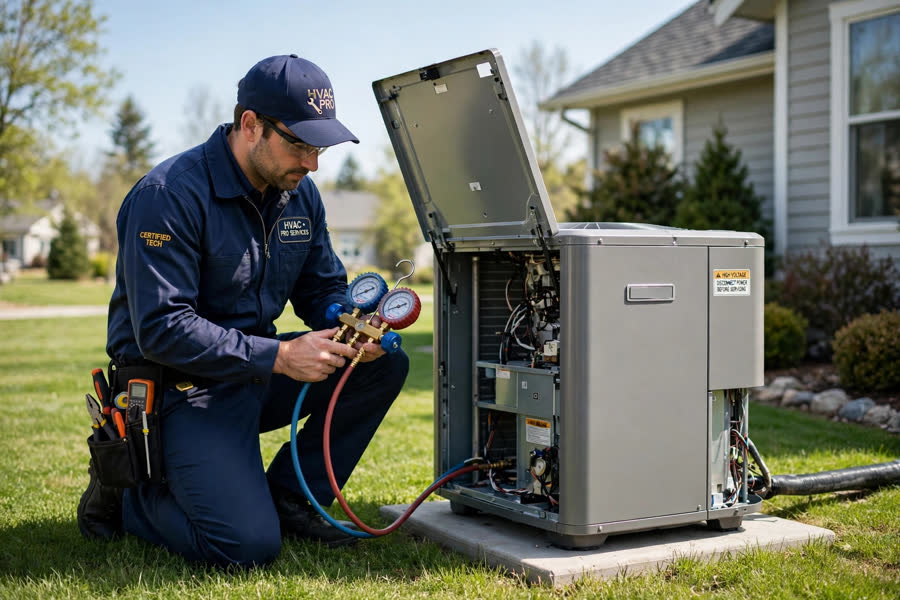
Central air conditioner replacement, professionally installed in Houston:
Houston prices run slightly below the national average thanks to a competitive contractor market. Prices vary by home and contractor — see the factors below before comparing quotes.
In Houston, air conditioning isn't a comfort upgrade — it's survival equipment. When a system dies in July, indoor temperatures can pass 90°F within hours, which is why quotes for the same replacement can differ by $3,000 or more from one company to the next. This guide breaks down what a new central AC should cost in 2026, what a fair quote includes, and where the padding hides.
For a standard replacement — new condenser and matching indoor coil on your existing furnace and ductwork — most Houston homeowners pay between $3,900 and $9,100 installed. Bigger homes, higher efficiency ratings and ductwork problems push the number up; the tables below show where your job is likely to land.
Two Houston specifics shape almost every quote here. First, humidity: a Houston system has to wring moisture out of the air as well as cool it, which is why correct sizing and airflow setup matter more in this metro than in drier cities — an oversized unit that cools fast and shuts off leaves the house cold and clammy. Second, many larger Houston homes run two separate systems, one per floor. Replacing both in a single visit costs more in total but noticeably less per system than two separate emergency calls a year apart, so if your second system is the same age as the one that just died, price the pair together before you commit to a single replacement.
| System size | Installed cost | Good to know |
|---|---|---|
| 2 ton | $3,900 – $5,200 | Homes up to roughly 1,200 sq. ft. |
| 2.5 ton | $4,300 – $5,900 | Common in smaller Houston single-story homes |
| 3 ton | $4,800 – $6,600 | The most common size in the Houston metro |
| 3.5 ton | $5,300 – $7,400 | Typical for 1,800–2,200 sq. ft. homes |
| 4 ton | $5,900 – $8,200 | Larger two-story homes, high ceilings |
| 5 ton | $6,800 – $9,100 | Homes over ~2,600 sq. ft.; some homes use two smaller systems instead |
Installed prices at standard efficiency (14.3–15.2 SEER2, the Southwest minimum) including the outdoor unit, indoor coil, labor and disposal. Ranges compiled from Modernize, Angi and HomeGuide 2026 cost data. Higher SEER2 ratings add roughly 10–25% per step up.
| Line item | Typical cost |
|---|---|
| Condenser + matched indoor coil (3 ton, standard efficiency) | $2,600 – $4,200 |
| Installation labor (licensed HVAC crew) | $1,000 – $2,200 |
| Refrigerant line set flush/replace & charge | $250 – $800 |
| New thermostat (programmable or smart) | $150 – $450 |
| Condensate drain work & safety float switch | $100 – $400 |
| City of Houston / Harris County permit & inspection | $100 – $300 |
| Removal & disposal of the old system | $100 – $300 |
Ask for the quote itemized like this. A single lump-sum number with no equipment model numbers is where inflated pricing hides — and you can't compare two bids without knowing exactly which system each one is selling.
The biggest single factor. Each extra ton adds equipment cost — but an oversized system is worse than an expensive one: it short-cycles, leaves Houston humidity in the air, and wears out sooner. Insist on a Manual J load calculation, not a rule-of-thumb guess.
The Southwest minimum is 14.3 SEER2. Stepping up to 16–18 SEER2 adds roughly $800–$2,500 to the install price but cuts cooling bills 15–30% — a real payback in a city that runs AC nine months a year.
Leaky, undersized or crushed ducts are common in older Houston homes. Sealing or partial duct replacement adds $500–$3,000, but a new AC on bad ducts will never perform to its rating.
New systems use R-454B or R-32 refrigerant. If your old system runs on R-22, the line set may need replacing rather than flushing, and the old equipment has little residual value — both add to the quote.
Replacing just the outdoor unit is cheaper up front, but pairing it with a mismatched indoor coil can void warranties and cost efficiency. A matched condenser + coil is the standard quote — confirm which one you're getting.
July emergency replacements leave you no negotiating room. Replacing a aging system in spring or fall — when Houston crews aren't booked solid — often means better pricing and faster scheduling.
Most Houston homeowners pay $3,900–$9,100 for a full central AC replacement, with an average around $5,900. A standard 3-ton system typically lands between $4,800 and $6,600 installed; high-efficiency systems run $7,000–$11,500.
Typically 12–15 years — shorter than in milder climates, because Houston systems run hard for most of the year and humidity corrodes coils. Regular maintenance can push a well-kept system toward 15–18 years.
Most homes need 3–4 tons. The right answer comes from a Manual J load calculation that accounts for square footage, insulation, windows and ceiling height — not square footage alone. In Houston's humidity, correct sizing matters as much for moisture removal as for temperature.
Use the $5,000 rule: age × repair cost. A 12-year-old system needing a $600 repair scores 7,200 — replacement usually wins. Common repairs run $150–$1,900 in Houston; a failed compressor on an out-of-warranty, R-22 system is almost always a replacement conversation.
Most straightforward replacements are finished in a single day — 4 to 8 hours on site. Jobs with ductwork changes, line-set replacement or electrical upgrades can take a second day.
Yes. The City of Houston requires a mechanical permit for AC replacement, and the installation must pass inspection. Your contractor should pull it as part of the job — budget $100–$300, and be wary of any installer who suggests skipping it.
Disclaimer: Prices on this page are researched estimates compiled from published cost data (Angi, Modernize, HomeGuide — checked October 2026) and are shown as ranges, not quotes. Actual prices vary by home, contractor, and market conditions. Always confirm the full scope of work and the final price in writing before any work begins.
HVACFull heating + cooling system changeouts in the Valley — heat pumps, split systems and rooftop packages.
HVACDesert cooling priced by tonnage, including rooftop package units and crane fees.
HVACAir-source heat pumps priced by size and type, with ductless and dual-fuel options.